
Meta Description:
Explore the key differences between traditional marketing and digital marketing. Learn which strategy works better for businesses in today’s digital world.
Introduction
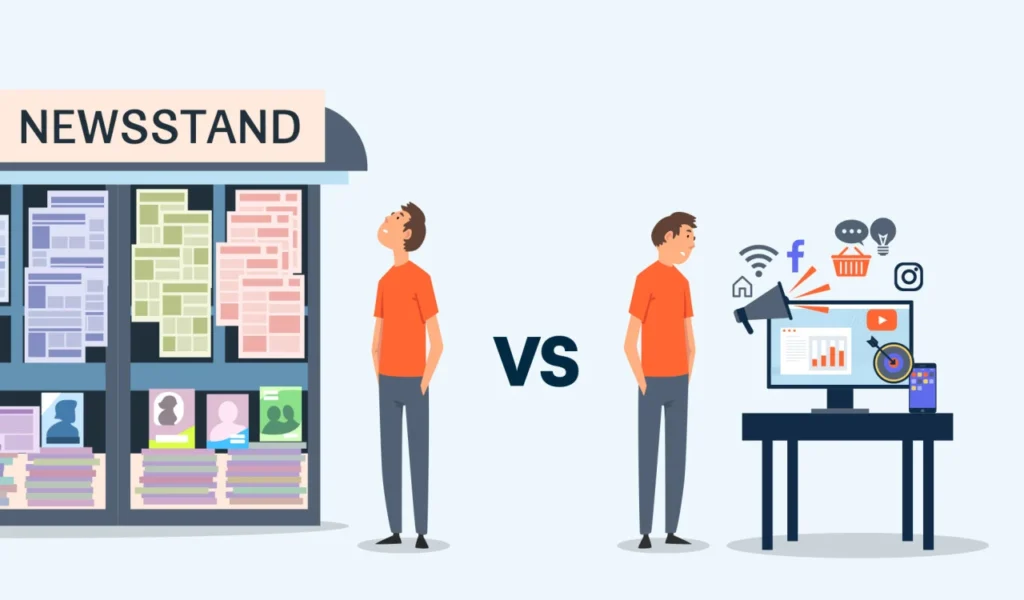
Marketing has always been essential for business growth, but the methods have evolved significantly over time. While traditional marketing once dominated the industry, digital marketing has rapidly taken over in recent years.
In 2026, businesses often face an important question: Which works better—traditional marketing or digital marketing? The answer depends on various factors, but understanding both approaches is key to making the right decision.
What is Traditional Marketing?
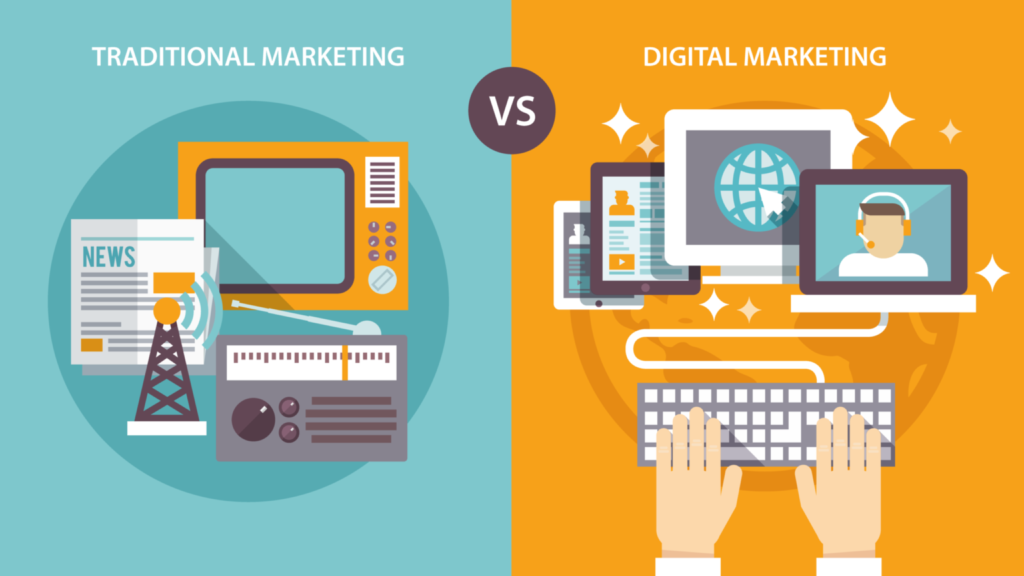
Traditional marketing refers to conventional methods of promoting products and services. These include:
- Television advertisements
- Radio commercials
- Newspaper and magazine ads
- Billboards and flyers
These methods focus on reaching a broad audience but offer limited targeting and tracking capabilities.
What is Digital Marketing?
Digital marketing involves promoting products and services through online platforms such as:
- Social media
- Search engines
- Websites and blogs
- Email marketing
It allows businesses to connect with their audience in a more targeted, measurable, and interactive way.
Key Differences Between Traditional and Digital Marketing
1. Reach and Audience Targeting
Traditional marketing reaches a wide audience but lacks precise targeting. Digital marketing, on the other hand, allows businesses to target specific groups based on age, location, interests, and behavior.
2. Cost and Budget
Traditional marketing can be expensive, especially for small businesses. Digital marketing is more cost-effective and offers flexible budgeting options, making it accessible to businesses of all sizes.
3. Measurability and Analytics
One of the biggest limitations of traditional marketing is the difficulty in measuring results. Digital marketing provides real-time data and insights, allowing businesses to track performance and optimize campaigns.
4. Engagement and Interaction
Traditional marketing is mostly one-way communication. Digital marketing enables two-way interaction, allowing businesses to engage directly with customers through comments, messages, and feedback.
5. Speed and Flexibility
Digital campaigns can be launched, paused, or modified instantly. Traditional marketing methods require more time for planning and execution.
Advantages of Traditional Marketing
Despite the rise of digital marketing, traditional methods still have value:
- Builds strong local brand recognition
- Effective for mass awareness campaigns
- Tangible materials like brochures create lasting impressions
Advantages of Digital Marketing
Digital marketing offers several powerful benefits:
- Highly targeted audience reach
- Cost-effective strategies
- Real-time performance tracking
- Better customer engagement
- Global reach with minimal investment
What Works Better in 2026?
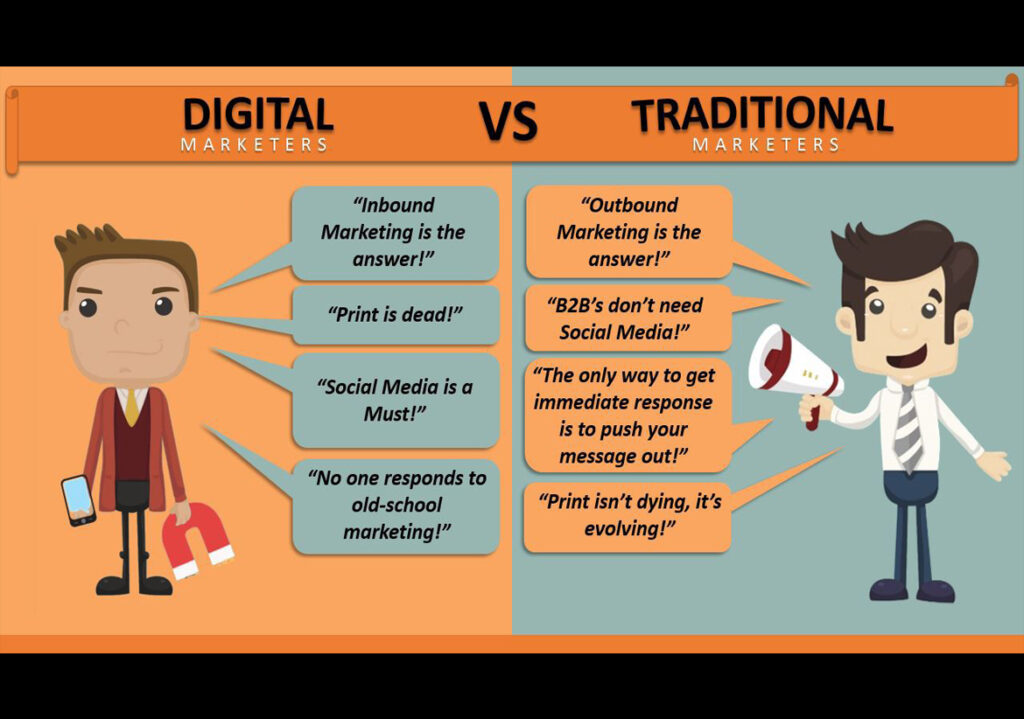
In today’s digital-first world, digital marketing clearly has the advantage. It is more flexible, measurable, and aligned with modern consumer behavior.
However, traditional marketing is not completely obsolete. For certain industries and local businesses, a combination of both strategies—known as integrated marketing—can deliver the best results.
Conclusion
Both traditional and digital marketing have their strengths, but the shift toward online platforms has made digital marketing the preferred choice in 2026.
Businesses that adapt to digital strategies while strategically using traditional methods when needed will achieve the best outcomes in a competitive market.