
“The Future of Digital Marketing: Role of AI in 2026”
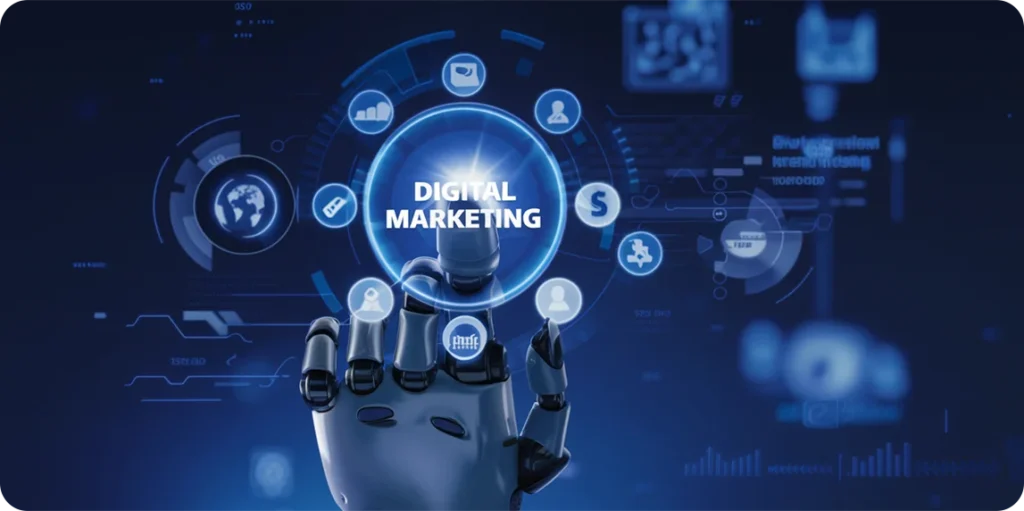
Artificial Intelligence has evolved into a central pillar of digital marketing in 2026, transforming how brands interact with their audiences and make strategic decisions. What once required manual effort and guesswork is now powered by intelligent systems capable of analyzing vast amounts of data in real time. This shift has enabled marketers to move from generic campaigns to highly personalized, data-driven experiences.
One of the most significant impacts of AI is in customer understanding. Modern AI tools track user behavior across websites, social media, and search engines to identify patterns and preferences. This allows businesses to segment their audience more accurately and deliver content that truly resonates. Instead of targeting a broad group, marketers can now reach the right person at the right time with the right message.
Personalization has reached a new level with AI. From product recommendations to dynamic website content, users now experience tailored interactions based on their interests and past behavior. This not only improves engagement but also builds stronger relationships between brands and customers. When users feel understood, they are more likely to trust and convert.
AI has also revolutionized content creation and optimization. Marketers can use AI tools to generate blog ideas, write captions, optimize headlines, and improve SEO performance. These tools analyze trending topics, keyword data, and competitor strategies to suggest content that performs well. As a result, businesses can produce high-quality content consistently while saving time and effort.
Another major advancement is in advertising and campaign management. AI-powered platforms can automatically optimize ads by testing different creatives, audiences, and placements. This process, often called A/B testing, is now faster and more accurate, ensuring better results with minimal manual input. Marketers can focus more on strategy while AI handles execution and optimization.
Predictive analytics is another powerful feature of AI in digital marketing. By analyzing historical data, AI can forecast future trends, customer behavior, and campaign outcomes. This helps businesses make proactive decisions instead of reactive ones. For example, brands can anticipate customer needs and launch campaigns before demand peaks.
Automation is equally important. AI streamlines repetitive tasks such as email marketing, customer follow-ups, performance tracking, and reporting. This increases efficiency and allows marketers to dedicate more time to creative thinking and long-term planning.
Despite its many advantages, AI also requires thoughtful use. Marketers must ensure that automation does not replace human creativity and authenticity. The best results come from a balance between AI-driven insights and human understanding.
In conclusion, AI is no longer just a trend but a necessity in digital marketing. Businesses that embrace AI can deliver more personalized experiences, optimize their strategies, and achieve better results in less time. As technology continues to evolve, the role of AI will only grow stronger, making it an essential tool for success in the digital world.
Hi, this is a comment.
To get started with moderating, editing, and deleting comments, please visit the Comments screen in the dashboard.
Commenter avatars come from Gravatar.